Research
Tracking your manuscripts through to submission
A single manuscript portfolio: role, current version, next step, pre-submission checks. No more papers stuck at V12.
The problem
First author on one, supervisor on another, co-author, reviewer or author of a book chapter elsewhere: an academic hospital physician often follows a dozen manuscripts in parallel. Versions multiply without any of them being frozen, a deadline passes without anyone checking that it was sent, and the most recent file sits in the Downloads folder.
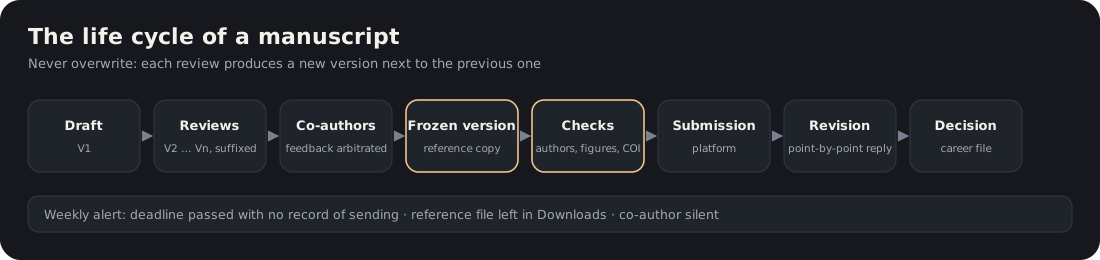
Figure. From draft to decision, without ever overwriting a version.
Step-by-step method
- A portfolio table, one row per manuscript: role (first author, last author, supervisor, co-author, reviewer), target journal, current version, date, next step, person responsible.
- A frozen reference version: each round of feedback produces a suffixed version; the table states which one is authoritative.
- The list of pre-submission checks, verified by Claude against the instructions for authors: allowed number of authors, number of figures and tables, conflict-of-interest declarations, patient consent, ethics committee, data availability.
- Co-authors’ comments are listed and resolved one by one; contradictions are flagged.
- Deadlines that passed without a trace (“sending not verified”) are raised as alerts every week.
- After submission: track the status (under review, revision, decision) and personal actions (confirming a link on the journal’s platform).
- The reference file is filed in the root folder, never left in Downloads.
Deliverable
An up-to-date portfolio, sorted by what is blocking, and a weekly alert on manuscripts with no news.
Safeguards
Unpublished manuscripts remain confidential. Authorship decisions (author order, responses to reviewers) remain human.
Starter prompt
Here are my ongoing manuscripts (short title, role, latest version, date). Build a portfolio sorted by urgency, check the target journal’s submission requirements for the most advanced one, and list the deadlines that passed with no trace of sending.