Case studies
From idea to tool, for real
Each case follows the five stages of the method, with the difficulties met, their solutions and the warning points.
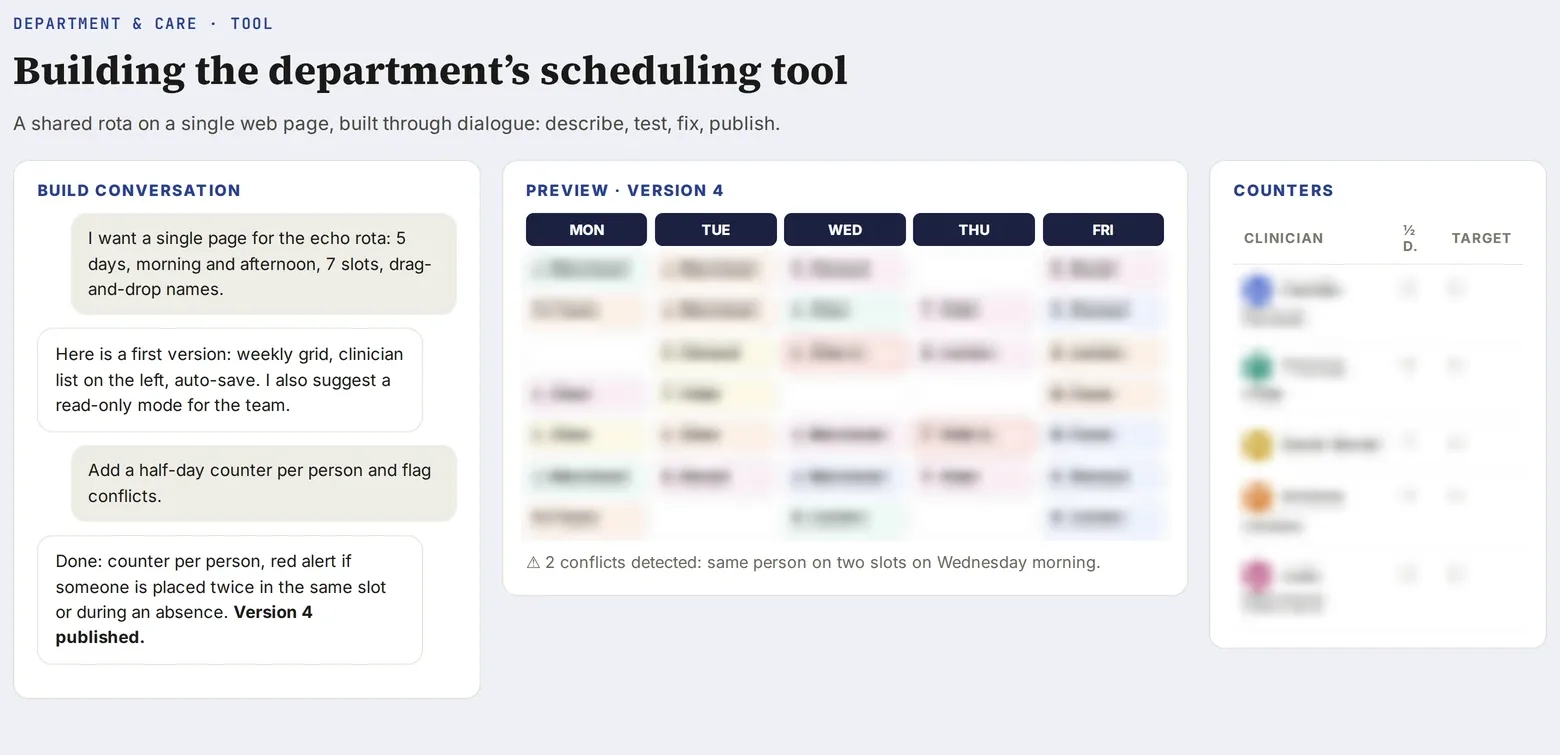
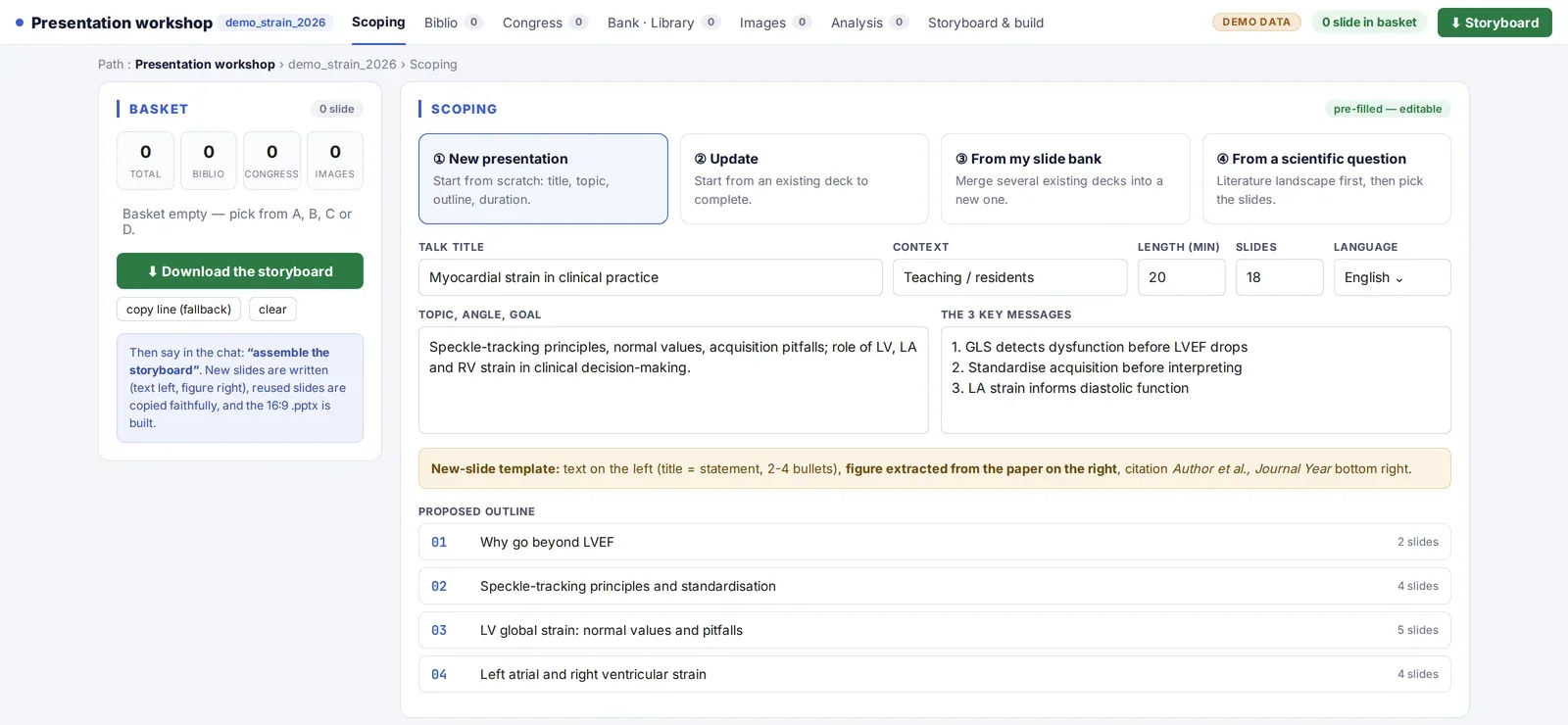
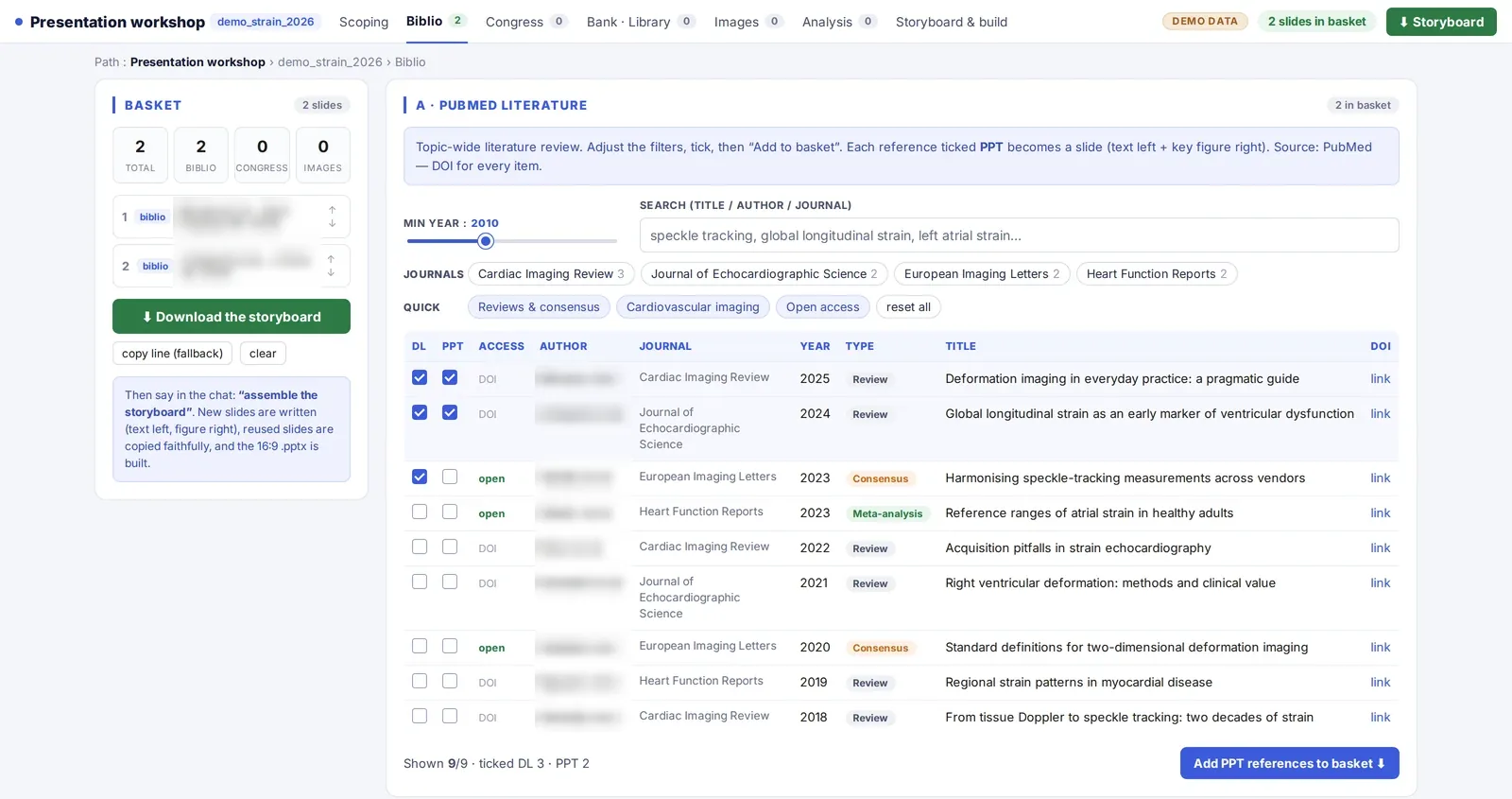
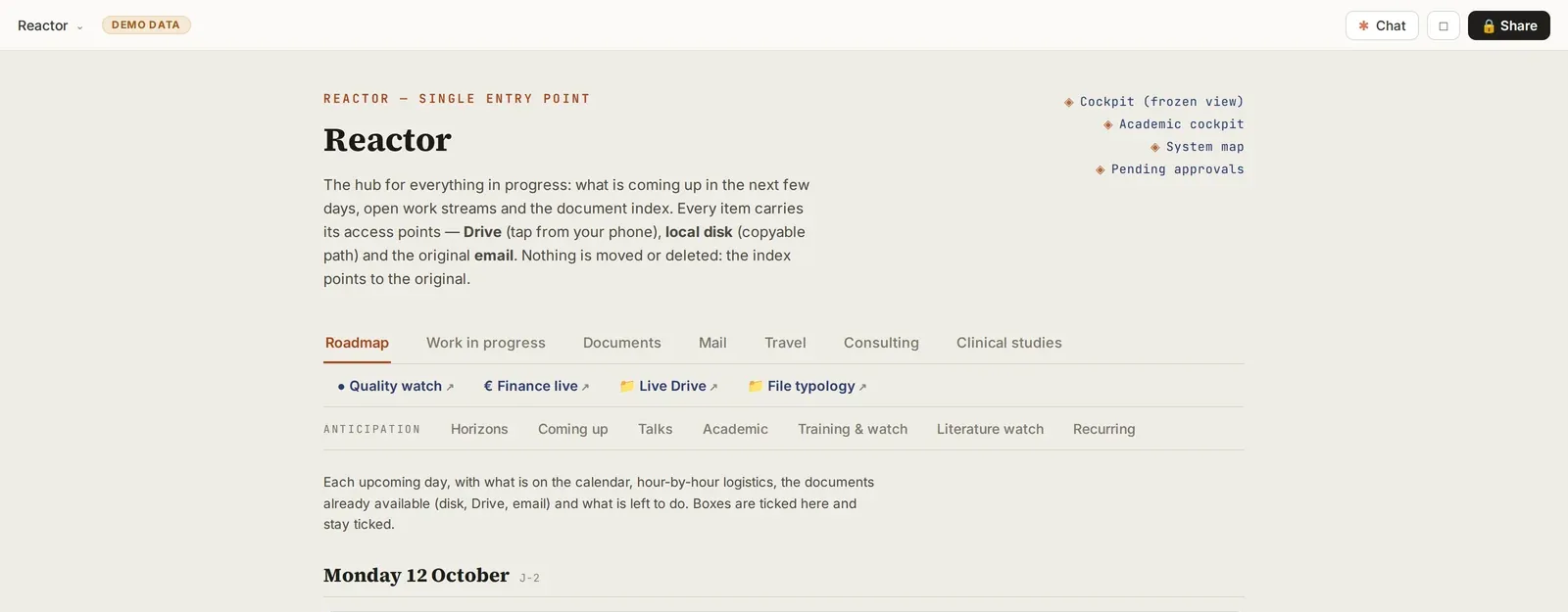
The department rotaWeb tool · From a spreadsheet to an online tool shared by the whole team: absences linked to emails, freed rooms and stand-ins, tested delivery, publication through a pull request. The real journey, difficulties included.The “conference presentation” skillSkill · From an invitation to speak to a single preparation workshop: entry point, bibliography, bank of past slides, validated storyboard, assembly on your template. The real journey of building the skill, mistakes included.The “bibliography” and “literature watch” skillsSkill · A one-off review and a permanent feed: exhaustive PubMed search, tick-box table, legal download, filing, then one slide per reference. Two skills built one after the other, and why you need two.The anticipation dashboardArtifact · See it coming rather than suffer it: day, week, month and semester horizons; backward-planned deadlines; presentations at D-30; literature watch; administrative recurrences. How the second row of the dashboard was built.Separating your projects by hatProject · One single conversation for everything, then six workspaces: academic, consulting, finances, personal, family, system. How to divide things up, which boundaries to write down, and what got stuck.Diagnosing and repairing a system that no longer talks to itselfRoutine · Building blocks that each worked on their own, but whose links had broken without a sound. Four surveys, a map, a pass over every arrow, fixes checked against their source, then monitoring that observes without repairing.Building a research database with ClaudeProject · Dozens of cohort files, exports and registries, several thousand patients: how a single, versioned, pseudonymised database was built with an orchestrator and sub-skills, and what each incident taught.