Common foundation
The quality loop: check, assess, learn
A living checklist per deliverable, a double test with evidence, and a self-learning loop: every error found becomes a rule that Claude rereads before producing.
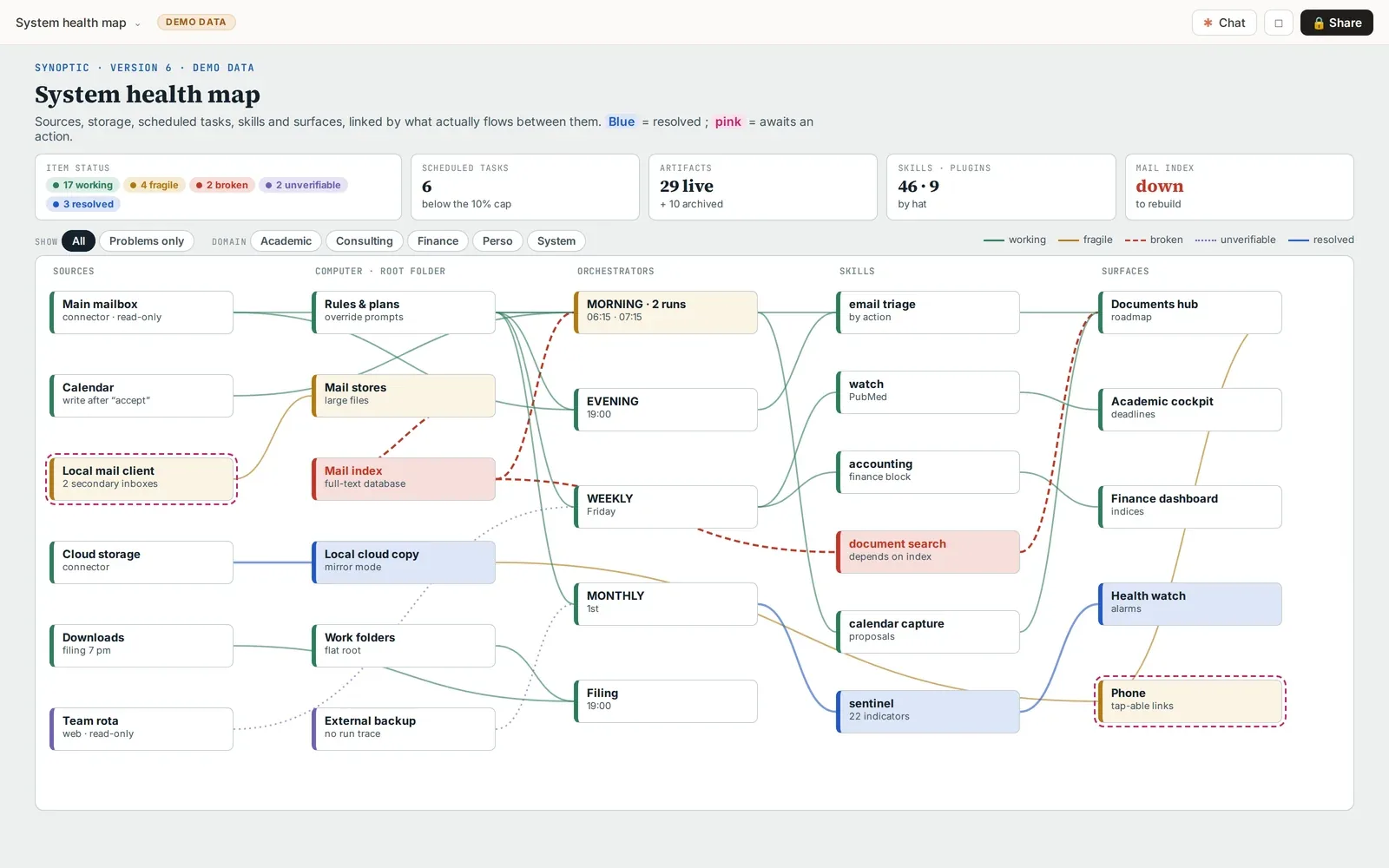
Screenshot of a real tool · fictitious data, names blurred
The problem
AI produces quickly and well, but not without errors: a reference that cannot be found, a misspelt name, a date off by one day, a broken link, a slide that does not match the template. If the error is not learned, it comes back in the next deliverable. Human proofreading, for its part, wears thin: you end up skimming what has always been right.
Step-by-step method
- One checklist per type of deliverable (slide, schedule, manuscript, email, published page): five to ten verifiable points, phrased as yes-or-no questions.
- First test, automatic: Claude goes through each point and answers “OK” or “GAP”, with the evidence (the identifier found, the directory line, the link tested). Whatever can be scripted is scripted (links, identifiers, duplicates, date formats).
- Second test, human and targeted: you do not reread everything; you reread the gaps and a small random sample of the “OK” items.
- Assess: a simple rating per deliverable (compliant, compliant with reservations, to be redone) and a dated record of what was checked.
- Learn: every error found, by you, a colleague or an external reviewer, becomes a new line in the list, with the example that revealed it. The list is versioned (v1, v2…).
- Reread before producing: the list is part of the skill. Claude reads it before generating the deliverable, not only afterwards: a learned error does not happen again.
- Weekly quality review: the week’s gaps, recurring errors, rules added, and rules never triggered in three months, candidates for removal.
- System health map: one status light per building block (last run, gaps, errors) to spot a silent failure before it becomes costly.
Deliverable
A living checklist per deliverable, a log of checks, a quality review every week.
Safeguards
The AI does not validate itself: a human check remains mandatory for anything that goes out (publication, email, submission). The loop proposes corrections and rules; it applies nothing without approval. An added rule is reviewed; a list that only ever grows longer is no longer read.
Starter prompt
Here is the deliverable and checklist v3. Go through each point and answer OK or GAP with the evidence. For each gap, propose the correction without applying it. Finish with the rules to add to the list, phrased as questions, with the example that justifies them.