Research
Preparing a conference presentation
Scoping, literature, inventory of your old decks, approved slide-by-slide outline, then building to your template and review.
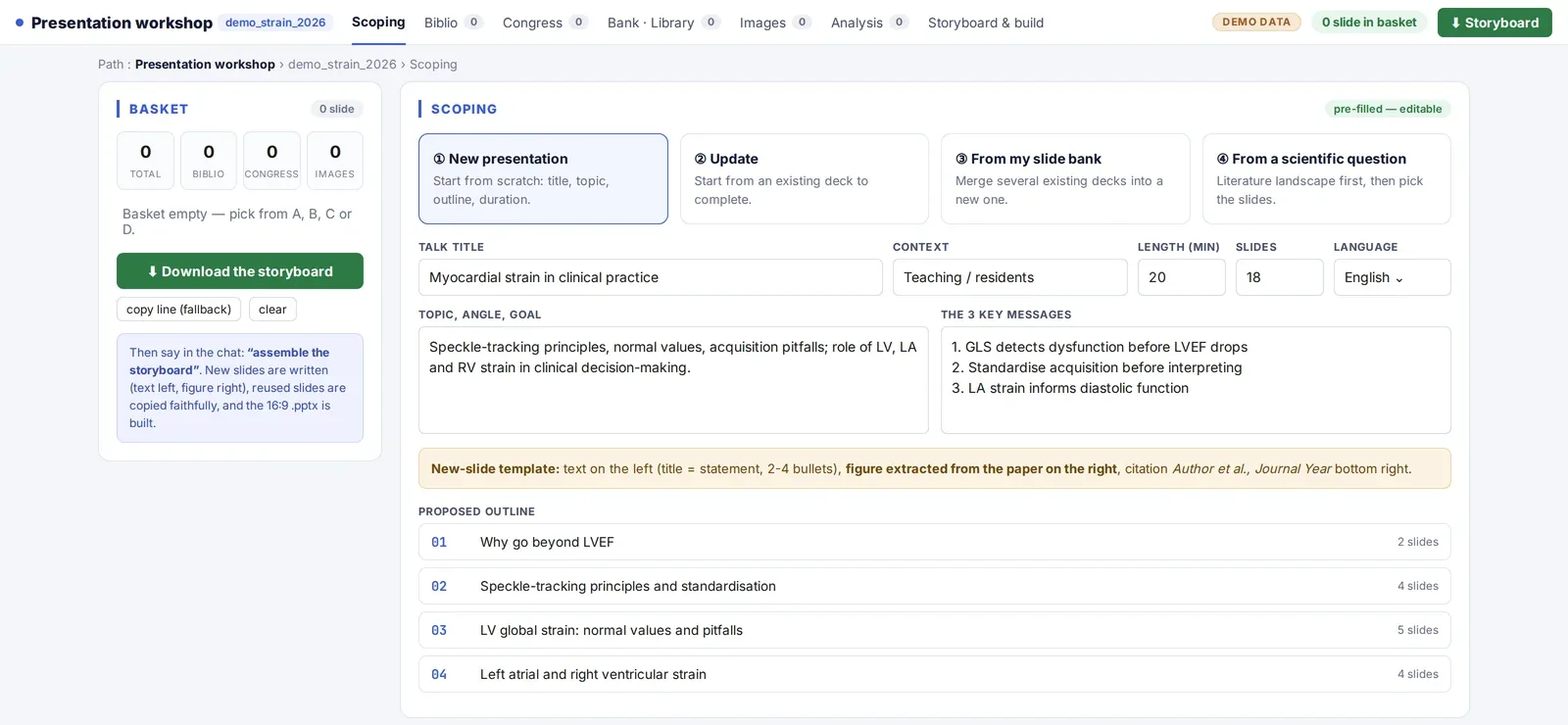
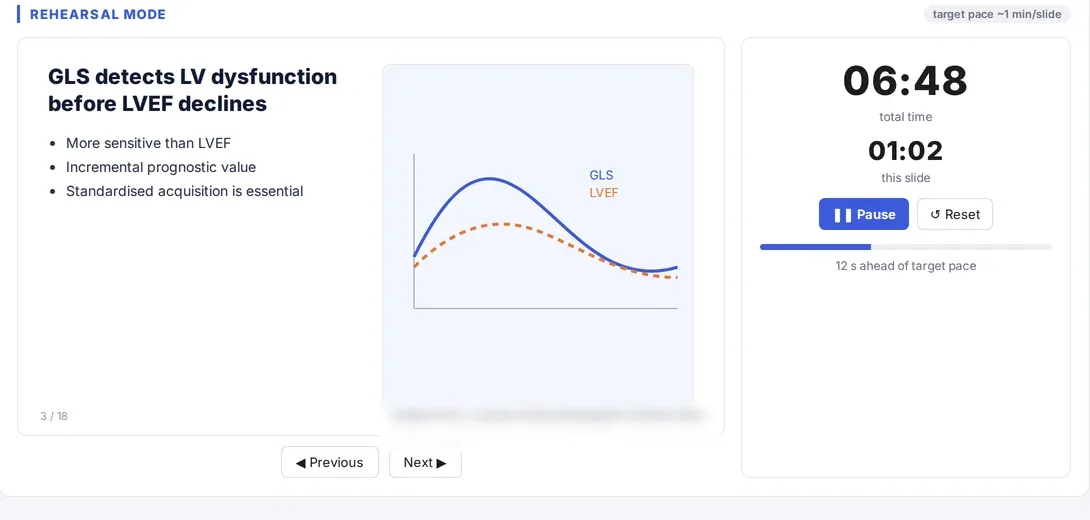
Screenshot of a real tool · fictitious data, names blurred
The problem
An invitation arrives: twenty minutes on a topic, in six weeks. You start again from a blank page even though you have presented similar subjects ten times.
Step-by-step method
- Scope: invitation, audience, duration, format (oral communication, round table, workshop), take-home message.
- Choose the starting point: blank deck, existing slide bank, update of an old presentation, or a new scientific question.
- Inventory the reusable old decks and the role of each one.
- Targeted literature review (PubMed, scientific society guidelines), with DOIs.
- Slide-by-slide outline, with the source of each slide and a list of open points. You approve the outline before anything is built.
- Build to your personal template: scientific content in English if the conference requires it, figures rebuilt from published numbers, references in the slide footer, abstract, DOI and PMID in the speaker notes.
- Reuse online conference materials you subscribe to: search for relevant presentations, keep the useful pages, integrate them while citing the source, strictly within the scope of your subscription.
- Speaker notes and talking points: for each slide, two or three sentences to say; for a debate or sponsored session, a sourced argument.
- Slide-by-slide review and a version log (VC1, VC2…), with a frozen version to send to the organizers.
- After the conference: close the project and add the new slides to the bank.
Deliverable
A sourced, versioned deck, and a reusable outline for the next invitation.
Safeguards
No invented statistics or quotes. No publisher figure reproduced without permission. Declaration of interests according to the conference rules.
Starter prompt
I have been invited to speak for 20 minutes on [topic] at [conference]. Here are my recent decks on related subjects. Propose a 15-slide outline, with for each slide the source (old deck or PubMed reference to add) and the points to decide. Do not build anything before I approve.