Teaching
Lectures, MCQs and exams
The chain of lecture, MCQs, exam-question review (docimology), exam and marking board, driven by D-30 and D-15 deadlines rather than by urgency.
The problem
Requests from the medical faculty arrive by email, with short deadlines: lecture slides, ten MCQs, an ECOS (OSCE) station, a docimology (exam-question review) file, a marking board. They often land at the same time as a conference.
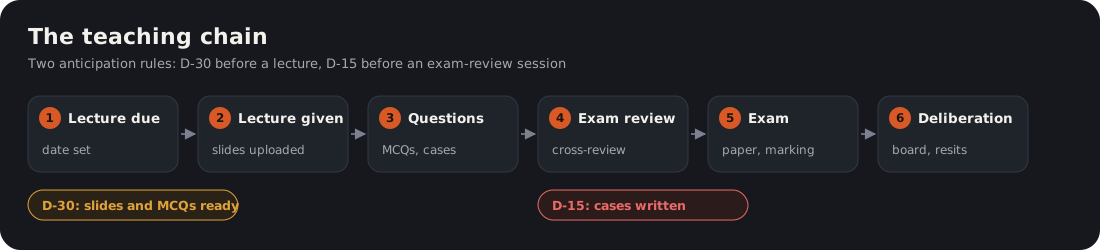
Figure. The teaching chain and its two forward-planning rules.
Step-by-step method
-
Map the annual cycle: which courses, on which dates, which assessments. A table is enough.
-
Set forward-planning rules: slides and MCQs ready at D-30, docimology files at D-15.
-
Have the faculty’s requests picked out of your emails by keyword (MCQ, ECOS, docimology, marking board), then add them to the forward-planning table.
-
Produce the MCQs from your slides: Claude proposes questions aligned with the learning objectives and the platform’s format, with the rationale for each answer; you review them.
-
Build an ECOS station: scenario, instructions to the candidate, marking grid, standardised-patient script.
-
Keep a table of delegated tasks (chefs de clinique, clinical fellows) with a named lead for each task.
-
Prepare lead-teacher meetings and keep the list of leads still to be appointed (docimology, tutoring); dates proposed by the faculty go into your calendar only after your approval.
-
Update older slides before each lecture, based on the most recent guidelines; the previous version is kept.
Deliverable
An annual calendar, reviewed slides and MCQ banks, ready-to-use ECOS stations, with no last-minute rush.
Safeguards
Exam papers are confidential: upload them only to a space whose access you control, and follow your faculty’s rules on AI tools.
Starter prompt
Here are my lecture slides on [topic]. Propose 10 MCQs with 5 options each, aligned with the course objectives, giving for each option the rationale and the source slide. Flag any concepts in the course that are not covered.