Research
Weekly literature watch
A few thematic PubMed feeds, deduplicated and sorted every week: 10 to 20 references, and a "make the slide" checkbox.
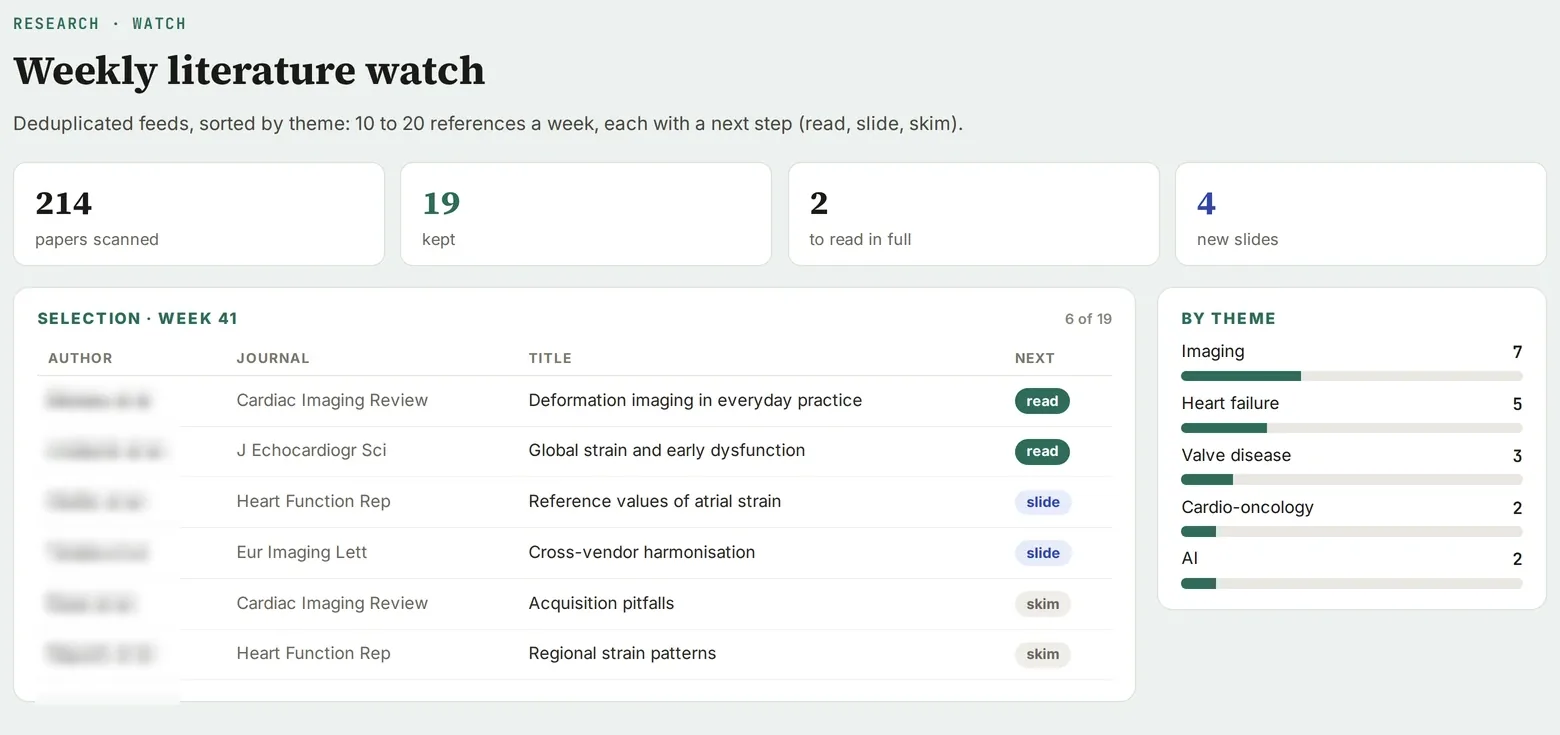
Screenshot of a real tool · fictitious data, names blurred
The problem
PubMed alerts and journal tables of contents pile up unread. Literature watch happens in fits and starts, before a congress or a talk.
Step-by-step method
- Define 3 to 5 thematic feeds: one PubMed query per topic (MeSH terms and keywords), limited to recent articles. A MeSH descriptor is used to search, never turned into a filter; to isolate reviews, filter by publication type rather than typing “review” as free text. No hard-coded date in an alert: the period is set when the search runs.
- Bring existing alerts (journal emails, PubMed alerts) into the same watch.
- Every week, the weekly task queries the feeds, deduplicates, and proposes 10 to 20 references sorted by relevance (study type, journal, guidelines). The same article published first online ahead of print and then in an issue can carry two identifiers: the duplicate is detected on the title. References that feed a presentation in progress come first.
- A digest: title, journal, year, a one-sentence summary, DOI and PMID, and a “make the slide” checkbox. One sub-bullet is reserved for the study’s main limitation. A status you have decided (kept, discarded) is never overwritten by the next run.
- Ticking “make the slide” queues the reference: a slide in your template, with the reference in the footer and the summary in the speaker notes. If the text overflows, cut bullets rather than shrinking the font.
- A whitelist of journals to filter out the noise.
- Check the coverage: compare your feeds with your existing alerts, and fill in the topics not covered.
Deliverable
A weekly digest readable on your phone and a slide bank that grows on its own.
Safeguards
Every reference comes from PubMed, with DOI and PMID: no reference generated from memory.
Starter prompt
Build 4 PubMed queries for my literature watch on [topics]. Run them over the last 7 days, deduplicate, and present the 15 most relevant references with a one-sentence summary, the DOI and the PMID.